
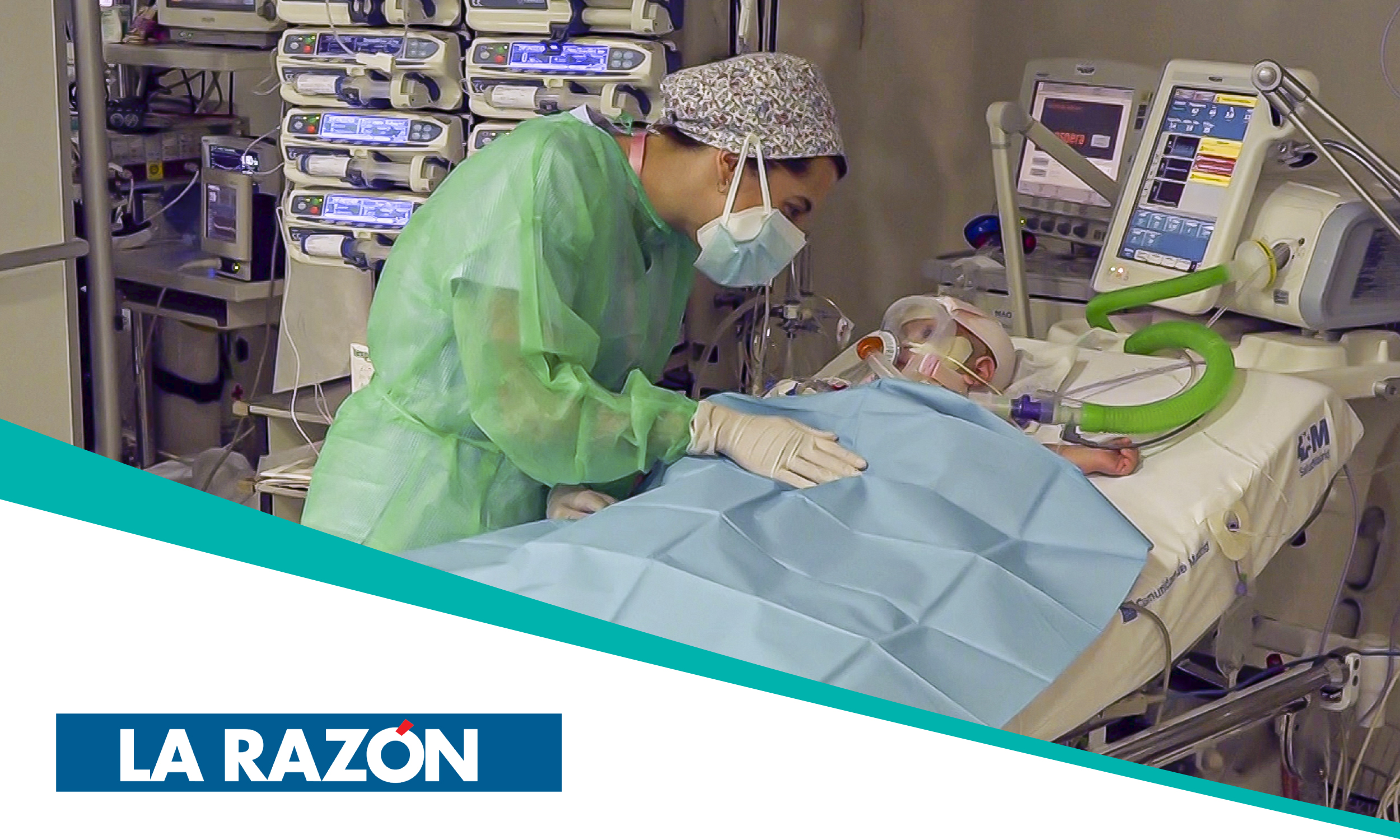
Researchers at Hospital General Universitario Gregorio Marañón have developed a cell-based therapy to prevent transplant rejection by administering regulatory cells derived from the patient’s own thymic tissue.
“I was surprised when they told me that transplants are not for life,” says Irene’s father. Irene was born with cardiomyopathy and underwent a heart transplant last November. That goal — a lifelong transplant — may now be closer than ever thanks to research carried out at the Madrid hospital, where three infants are currently living without signs of rejection of their transplanted organs.
Six years ago, the team set out to develop a therapy that could make transplanted organs last a lifetime. Their approach focuses on regulatory T cells (Tregs), which maintain immune balance and promote immunological tolerance — in other words, reducing the likelihood of rejection.
Regulatory T cells are already used in adult liver and kidney transplant recipients, typically extracted from the patient’s blood. However, as Rafael Correa Rocha, Head of the Immunoregulation Laboratory, explains, “We cannot extract large volumes of blood from children. Instead of looking for regulatory cells in blood, we turned to the thymus — a primary lymphoid organ located near the heart — as a source of Treg cells.”
During heart transplant surgery, the thymus is often removed. “We recover this tissue and isolate regulatory cells from it,” Correa explains. The difference in yield is striking: approximately two million regulatory cells can be obtained from a child’s blood, or around 30 million from adult blood, whereas up to ten billion cells can be extracted from a pediatric thymus. “In addition, thymus-derived cells have longer persistence and stronger regulatory capacity than blood-derived cells,” he adds.
After collecting the thymic tissue and isolating the regulatory cells, the therapy is administered to the transplant recipient approximately seven to nine days after surgery.
The results so far are promising. With previous techniques, regulatory cell levels typically began to decline before the first year post-transplant. In Irene’s case, however, nine months after treatment, a stable reserve of regulatory cells has been established. “We hope that with this therapy, her heart will last for many years,” Correa says.
Irene has shown higher levels of circulating Treg cells than typically seen in patients who have not received the therapy. These cells appear to be keeping inflammatory mechanisms and immune cell proliferation that could trigger rejection under control.
She continues to progress favorably in her immune response, and researchers are closely evaluating how thyTreg therapy may reduce the risk of rejection, particularly during the first post-transplant year — the most critical period.
Another advantage of the technique is that regulatory cells can be cryopreserved, allowing additional doses to be administered in the future. The next objective is to determine whether these thymus-derived cells could eventually be used in other patients.
At present, Irene continues to receive standard immunosuppressive therapy in addition to the regulatory cell treatment. “Our goal is to gradually reduce immunosuppressive drugs,” Correa notes.
This marks the first time worldwide that a cell therapy has been used to prevent rejection in transplanted children — and the first time thymic tissue has been used as a source of regulatory T cells in humans, offering significant advantages in both cell quantity and quality.
Researchers also believe that the large numbers of regulatory T cells that can be produced through this method could potentially be applied to other diseases, including COVID-19 and autoimmune disorders.
The entire process — from preclinical research to therapeutic application — has been developed entirely by the Immunoregulation Laboratory at Gregorio Marañón, with financial support from the Instituto de Salud Carlos III and the Fundación Familia Alonso, positioning the hospital at the global forefront of this therapy. The project is also conducted under the auspices of the Organización Nacional de Trasplantes (ONT).
“We want, in the near future, a transplant with little or no immunosuppression — eliminating the burden of side effects associated with chronic drug administration,” says ONT Director General Beatriz Domínguez-Gil.
More info: larazon.es