
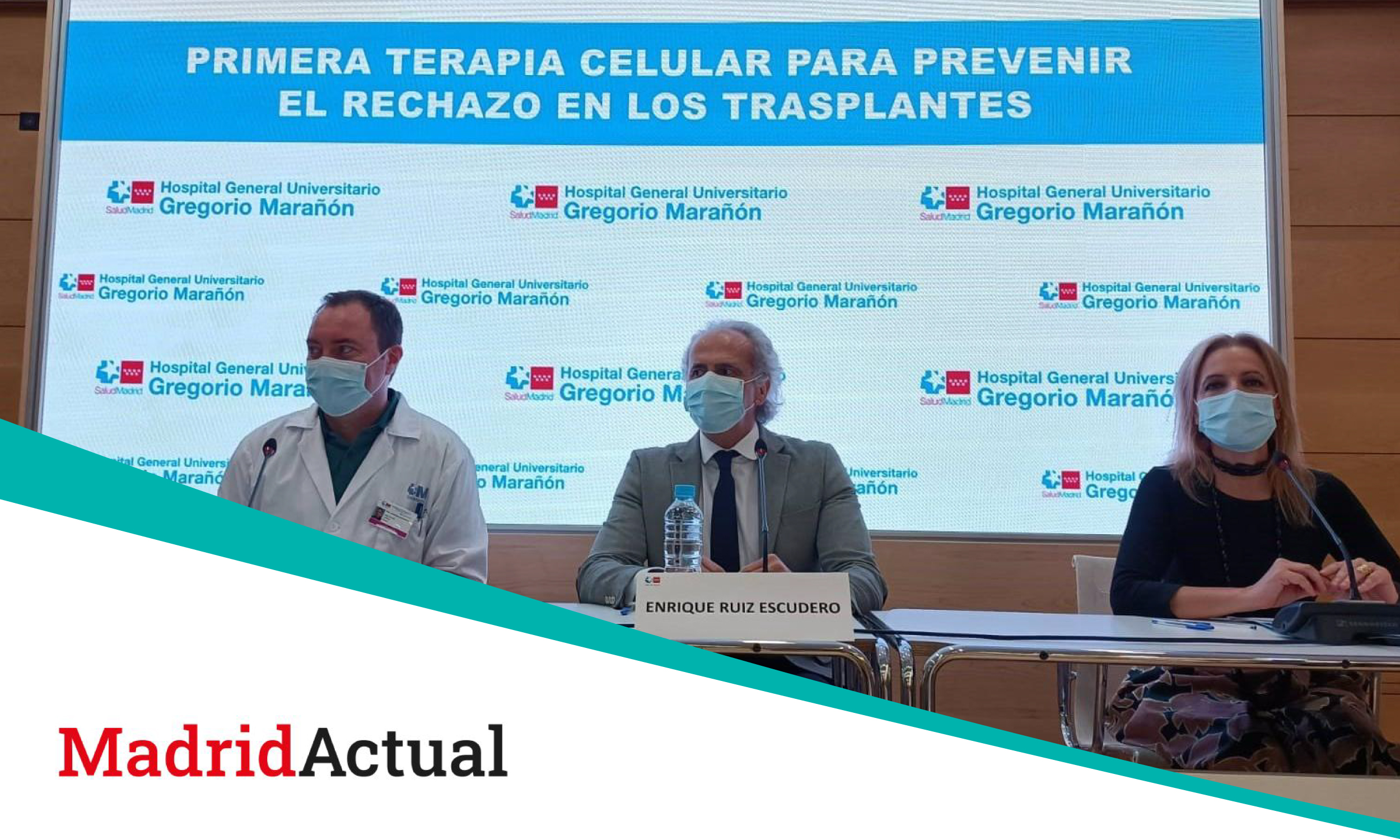
Researchers at Hospital General Universitario Gregorio Marañón have developed a world-pioneering cell-based treatment to prevent organ transplant rejection.
According to the Madrid-based team, the therapy may regulate the immune system’s response and prevent rejection. Developed over more than six years entirely at Gregorio Marañón, the treatment could completely inhibit or significantly reduce the immune response responsible for rejection. Its goal is to extend indefinitely the survival of the transplanted organ and the patient’s life.
The research team has reported that three infant heart transplant recipients are already being treated with this technique and are progressing favorably. Nine months after starting therapy, the first child continues to show no signs of rejection in her new heart and maintains adequate levels of regulatory cells — a key factor in preventing rejection.
“Although these are preliminary results, they are very encouraging. We believe this could open a new era in the clinical management of immune rejection. Thanks to this therapy, we hope she will be able to keep her new heart for many years,” said Dr. Rafael Correa Rocha, head of the Immunoregulation Laboratory at Gregorio Marañón and one of the project leaders. The initiative is supported by the Organización Nacional de Trasplantes (ONT) and its Canadian counterpart.
At a press conference, Correa Rocha emphasized that “sooner or later, the organ is rejected by the body’s defenses — the immune system.” As a result, most transplanted organs last fewer than 20 years. “This is a reality that transplant recipients and their families must accept. A transplant is not for life,” he stressed.
He noted that “half of pediatric heart transplants are lost before 15 years.” Until now, rejection has been managed with immunosuppressive drugs, which have important limitations. “They are not fully effective in preventing rejection, and treated children have a higher incidence of autoimmune diseases or cancer,” he explained.
Correa Rocha highlighted the importance of the research, stating that “this is the first time in the world that a cell therapy has been developed for transplanted children.” He added that it is also the first time thymic-derived cells have been used to regulate the immune response and prevent rejection.
The team is also exploring potential applications of this technique in other conditions, such as COVID-19, as it “could help restore immune imbalance” in infected patients — one of the most severe aspects of the disease.
Beatriz Domínguez-Gil, Director of the ONT, welcomed the significance of the project. “What this promises is undoubtedly what we must aspire to and our main priority in transplantation: the generation of immune tolerance,” she said.
She added that the impact of this cell therapy “could be extraordinary.” “It is akin to enabling the transplanted organ to integrate with the recipient’s immune system so that it is no longer attacked. It could also reduce waiting lists, as fewer patients would require retransplantation.”
Madrid’s Regional Health Minister, Enrique Ruiz Escudero, described the development as “another major milestone for Spanish healthcare.” “We are witnessing an unprecedented medical advance. We must continue to firmly support healthcare research,” he concluded.
More info: madridactual.es