
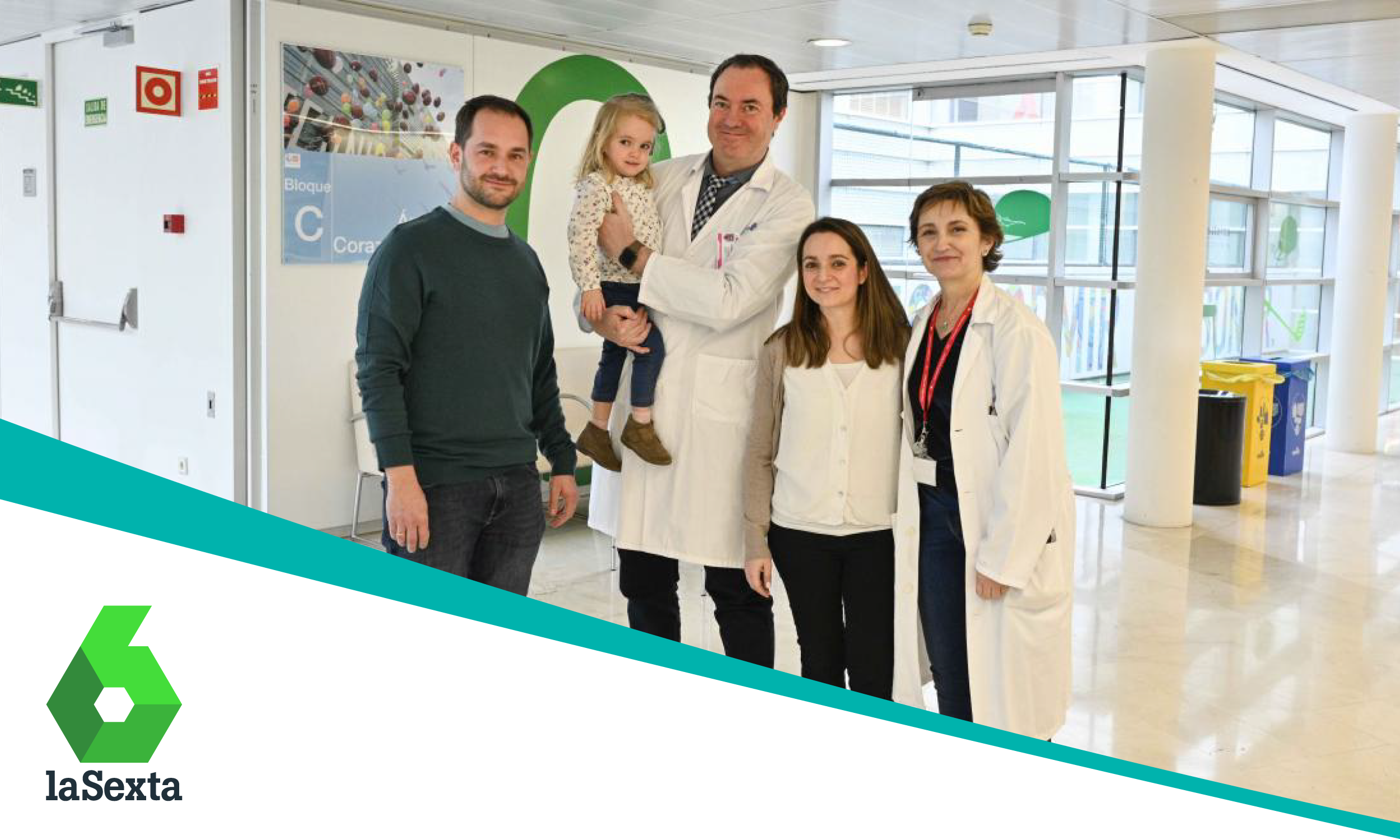
A therapy developed at Hospital General Universitario Gregorio Marañón has demonstrated its effectiveness in preventing rejection in pediatric heart transplants: seven children who underwent heart transplantation have been successfully treated. Little Irene is one of them.
This innovative therapy — unique worldwide — is based on a cellular approach using thyTreg cells to prevent immune rejection and potentially extend the survival of the transplanted organ indefinitely, thereby prolonging the patient’s life. In doing so, it may significantly extend the lifespan of the transplanted heart.
Developed by researchers at the Immunoregulation Laboratory of Hospital Gregorio Marañón, a public hospital in the Community of Madrid, the therapy has been successfully administered to seven infant heart transplant recipients as of January 2024. Preliminary results suggest that “a single administration of this therapy is capable of restoring immune balance and may prevent acute organ rejection in these children.”
Irene, the First Patient
One of the children treated with this new therapy is six-month-old Irene, who was born with a congenital heart condition requiring heart transplantation. She became the first patient in the world to receive this innovative treatment.
One week after her transplant, Irene received a single dose of her own thyTreg cells. She has been closely monitored for two years to assess whether the therapy could reduce the risk of rejecting her new heart.
During this period, according to the hospital’s official statement, “Irene has shown higher circulating levels of Treg cells than pediatric heart transplant patients who did not receive thyTreg therapy. The presence of these cells has helped maintain control over the immunological mechanisms that could trigger rejection.”
Her father, Juan, explains that “she is doing very well, living a normal life and attending school,” although under the precautions required for an immunocompromised child.
As a potential benefit of the therapy, “no signs of rejection have been detected in this patient during the two years following transplantation, which is the period with the highest incidence of rejection in these children.” These findings were recently published in the prestigious international scientific journal Journal of Experimental Medicine.
An Unprecedented Advance
“We are witnessing an unprecedented medical advance that could establish a new paradigm in the treatment of various severe diseases,” explains Rafael Correa Rocha, Director of the Immunoregulation Laboratory at Hospital Gregorio Marañón. The unit has spent the past ten years researching how to obtain large quantities of high-quality Treg cells from an alternative source to blood, enabling pediatric patients to access this type of advanced therapy.
The breakthrough involves developing an entirely new strategy to manufacture therapeutic doses of Treg cells from thymic tissue — a tissue that covers the heart and is routinely discarded during pediatric cardiac surgeries.
“Treg cells obtained from thymic tissue (thyTregs) possess unique qualities and an exceptionally high regulatory capacity. The protocol developed by our group allows us to obtain thousands of times more cells than can be extracted from blood,” the team explains.
This therapy may restore proper immune balance and could completely inhibit or significantly reduce the immune responses responsible for rejection, potentially extending graft viability indefinitely and thereby prolonging patients’ lives.
“Because the therapy uses the patient’s own cells, side effects are minimal. It could be implemented in hospitals in the near term, improving transplant survival rates in a country that leads the world in organ donation and transplantation,” the experts conclude.
More info: lasexta.com