
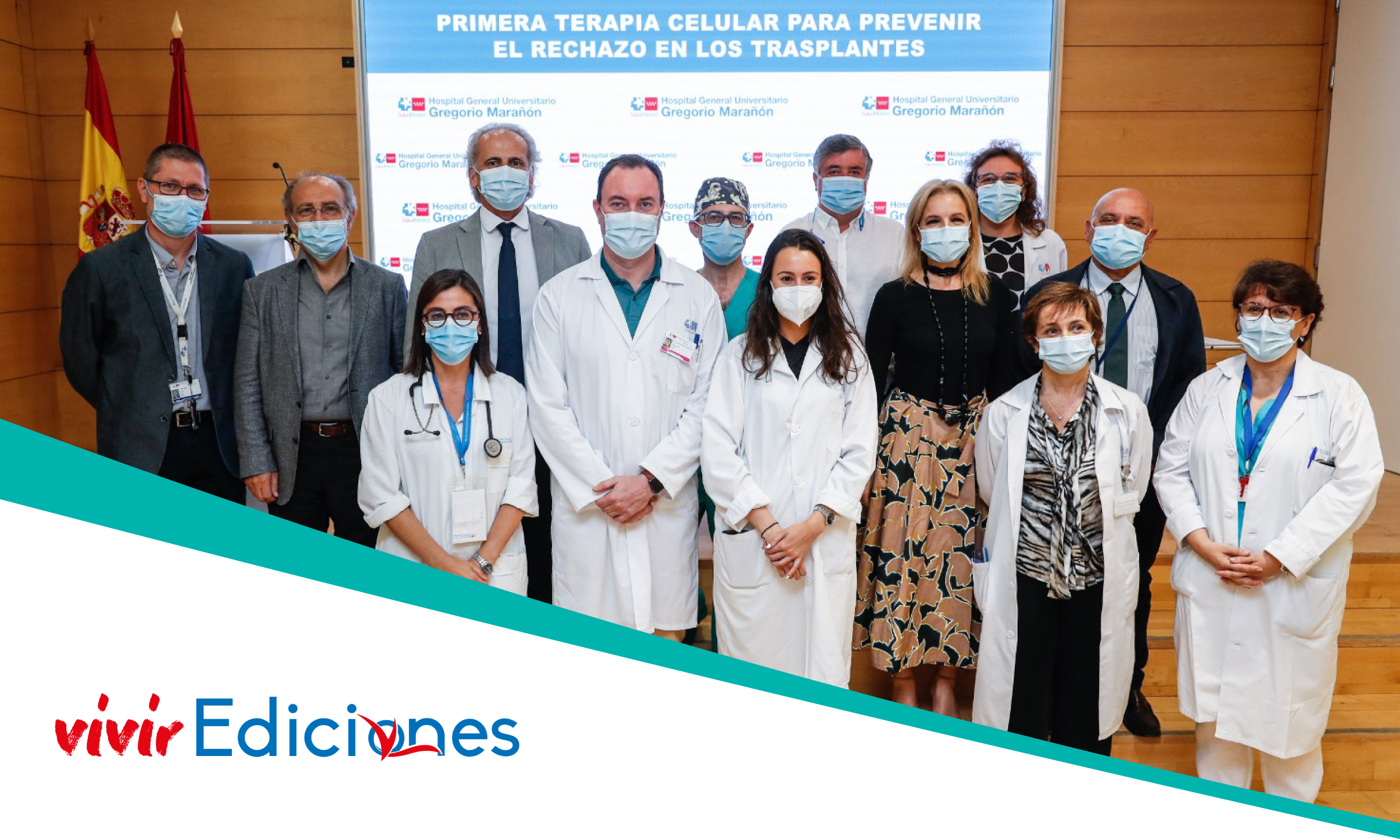
Three babies who have undergone heart transplants are already being treated with this technique and are progressing favorably.
Researchers at Hospital General Universitario Gregorio Marañón, part of the public hospital network of the Community of Madrid, have independently developed a world-unique treatment to prevent immune rejection and potentially extend indefinitely the survival of transplanted organs — and therefore the lives of patients.
The Immunoregulation Laboratory at Gregorio Marañón, responsible for this pioneering cell-based therapy, has presented the results of more than six years of research led by Rafael Correa.
This new technique uses regulatory T cells derived from thymic tissue (thyTreg) to prevent organ rejection and potentially eliminate the need for immunosuppressive drugs. Because the therapy uses the patient’s own cells, side effects are minimal, improving the quality of life of transplant recipients. The therapy could be implemented in hospitals in the near future.
The Regional Minister of Health of the Community of Madrid, Enrique Ruiz Escudero, attended the presentation of this innovative study, which has already shown promising results in the three infant heart transplant recipients currently receiving this globally pioneering therapy developed at a public hospital in Madrid.
Ruiz Escudero highlighted the importance of this research in ensuring patient survival by preventing immune rejection without the need to administer immunosuppressive drugs. The study is supported by the Organización Nacional de Trasplantes (ONT) and endorsed by the Director of the Canadian Donation and Transplantation Research Program.
Little Irene
Of the three children treated so far, the first was six-month-old Irene, born with a congenital heart defect requiring a heart transplant. She became the first patient in the world to receive this innovative therapy following her transplant at Gregorio Marañón Hospital.
Irene is progressing favorably in her immune response. Researchers are closely monitoring how thyTreg therapy may reduce the risk of rejecting her new heart, particularly during the first year post-transplant — the most critical period.
In the months following therapy, Irene has shown higher levels of Treg cells than typically observed in similar patients who did not receive cell therapy. The presence of these cells appears to be keeping inflammatory mechanisms and immune cell proliferation that could trigger rejection under control.
The Immune System’s Natural Regulation
In recent years, scientific studies have demonstrated that the immune system possesses an intrinsic regulatory or tolerance mechanism mediated by regulatory T cells (Treg), which control and reduce inappropriate inflammatory responses.
Over the past six years, the Immunoregulation Laboratory at Gregorio Marañón, directed by Rafael Correa Rocha, has investigated how to obtain large quantities of high-quality Treg cells from a source other than blood. Research conducted by Esther Bernaldo de Quirós, Marjorie Pion, and the rest of the team led to the development of a completely new strategy to manufacture therapeutic doses of Treg cells from thymic tissue — a structure located near the heart. Thymus-derived Treg cells (thyTreg) possess unique properties and very high regulatory capacity. Using the protocol developed by the group, thousands of times more cells can be obtained than from blood.
This team is a pioneer in the therapeutic use of these cells in patients and, together with the Pediatric Heart Area and the Cell Production Unit of the hospital’s Health Research Institute, has launched a clinical trial using thyTreg cells to prevent rejection.
The therapy has the potential to restore proper immune balance and could completely inhibit or significantly reduce immune responses responsible for rejection, thereby allowing indefinite survival of the transplanted organ — and extending the patient’s life.
More info: vivirediciones.es