
If the technique proves effective over time, it could mark the beginning of a new era in the clinical management of transplant rejection.
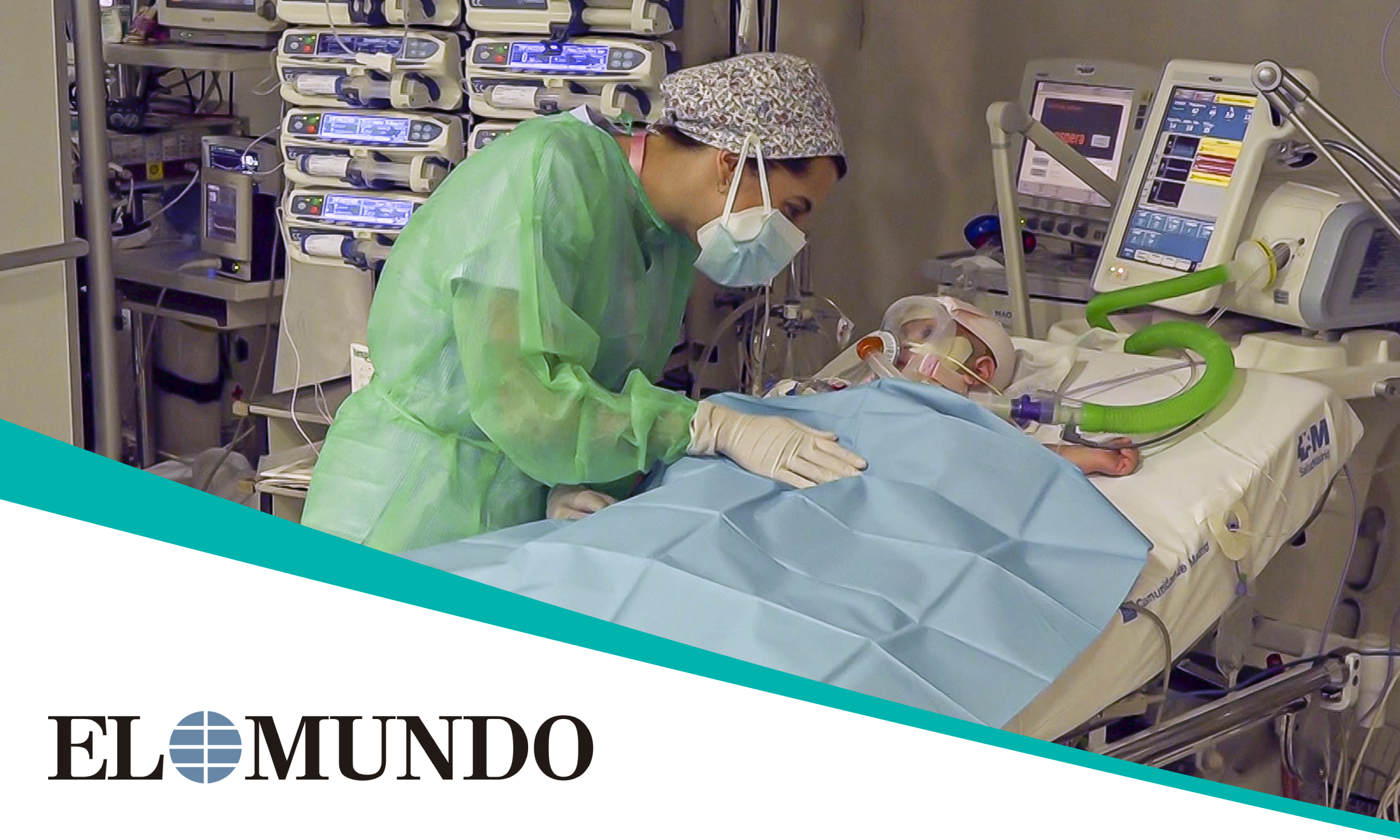
Six-month-old Irene has become the first of three children to receive a unique, cell-based therapy using regulatory T cells (Tregs) designed to control and reduce inappropriate inflammatory responses. The goal is to prevent immune rejection and potentially extend the survival of the transplanted organ indefinitely — and, with it, the patient’s life.
Of the three children currently undergoing treatment, Irene was the first to receive the therapy following her heart transplant at Hospital General Universitario Gregorio Marañón. She is the first patient worldwide to receive this approach.
The innovative strategy has been developed by researchers at the hospital’s Immunoregulation Laboratory, led by Rafael Correa Rocha. The team presented the first results of their more than six-year study, supported by the Organización Nacional de Trasplantes (ONT) and endorsed by the Canadian Donation and Transplantation Research Program.
Thymus-Derived Regulatory T Cells
Over the past six years, Correa Rocha’s laboratory has focused on extracting large quantities of high-quality Treg cells from an alternative source to blood: thymic tissue.
The research conducted by Esther Bernaldo de Quirós, Marjorie Pion, and the rest of the team led to the development of an entirely new strategy to manufacture therapeutic doses of Treg cells from the thymus — a tissue that covers the heart and is typically discarded during pediatric cardiac surgery.
Tregs derived from thymic tissue (thyTregs) possess unique properties and exceptionally high regulatory capacity. Thanks to the group’s protocol, it is possible to obtain thousands of times more cells than can be extracted from blood.
While similar strategies have been tested internationally in adults — demonstrating safety but limited effectiveness due to cellular aging — the results in children appear far more promising.
“The major surprise is that from a single pediatric thymus we can obtain up to ten billion regulatory cells,” Correa explains. He adds that, because these cells are newly generated, “they show much longer survival and stronger regulatory capacity than blood-derived cells, making them ideal candidates for therapy.”
According to Correa, this strategy — although still based on preliminary results — represents a new hope and could open a new era in the management of transplant rejection.
“With this therapy, we aim to prevent rejection and prolong graft survival. An important advantage is that multiple doses can be cryopreserved, allowing future administrations and potentially extending graft survival indefinitely. Furthermore, we may be able to reduce immunosuppressive drug doses if the therapy continues to demonstrate efficacy.”
Potential Applications Beyond Transplantation
In Correa’s view, this therapy represents a major breakthrough not only because it is the first time such a strategy has been applied in transplanted children, but also because it is the first time thymus-derived regulatory cells have been used in humans — a significant advantage due to their quality.
Another key aspect is the possibility of freezing these cells for use in other conditions. Given their anti-inflammatory properties, researchers are exploring potential applications in diseases such as COVID-19. There is also the possibility of using the therapy in other types of organ transplantation through allogeneic approaches, where preliminary observations suggest the cells maintain their regulatory activity.
The central aim of this strategy is to restore balance between regulatory T cells and effector T cells — a balance that becomes disrupted in pediatric heart transplant recipients. In the early years following transplantation, regulatory cells decline under pressure from effector cells. “Administering regulatory T cells seeks to reestablish that balance,” Correa explains.
This new cellular approach aims not only to prevent organ rejection but also to eliminate the need for long-term immunosuppressive drugs, which are associated with chronic side effects and reduced quality of life.
Clinical Progress and the Future of Immunosuppression
Irene is progressing favorably in her immune response, and researchers are closely evaluating how thyTreg therapy may reduce the risk of rejecting her new heart — particularly during the first post-transplant year, the most critical period.
In the months following therapy, Irene has shown higher levels of circulating Treg cells than typically observed in similar patients who have not received cell therapy. The presence of these cells appears to be keeping inflammatory mechanisms and immune cell proliferation under control.
For now, the children receiving the therapy continue to receive standard immunosuppressive treatment. However, given the encouraging results of this unique global experience, researchers are hopeful that immunosuppressive drugs — which increase the risk of infections, autoimmune diseases, and even cancer — may eventually be reduced or even eliminated.
Beatriz Domínguez-Gil, Director of the ONT, who participated in the presentation alongside Madrid’s Regional Health Minister Enrique Ruiz Escudero, emphasized that this therapy paves the way toward “a future without immunosuppression — or at least with minimal immunosuppression.”
More info: elmundo.es